Act I
The judge’s voice landed like a door slamming shut.
“Son, this case is closed.”
For one breath, nobody in the courtroom moved.
The room was too large for a boy like Ethan Marlow to stand in alone. Dark wood walls rose around him. The judge sat high above the floor beneath the Great Seal of the United States, his silver hair bright under the lights, his black robe making him look less like a man and more like the final word itself.
At the left counsel table sat Ethan’s older brother.
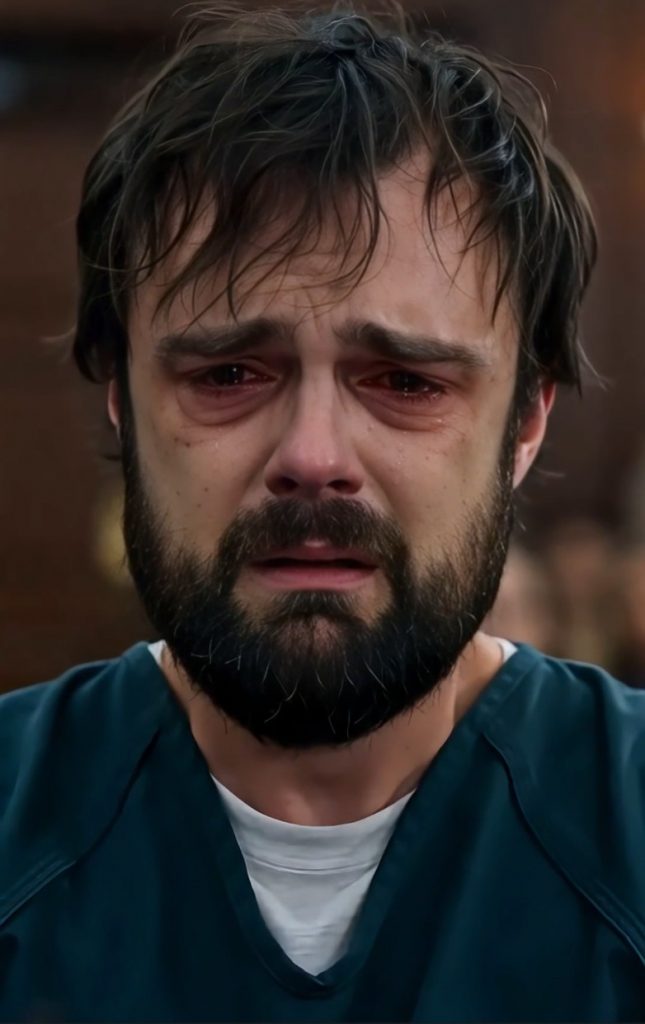
Caleb Marlow wore a dark green prison jumpsuit that seemed to swallow him whole. Two years ago, he had been broad-shouldered, loud-laughing, the kind of big brother who made grocery money stretch and turned rainy bus rides into adventures. Now his beard was uneven, his eyes red, his hands folded so tightly together that his knuckles looked pale.
He did not look like a criminal.
He looked like someone the world had broken and forgotten.
Ethan stood in the center aisle wearing a navy hoodie and old sneakers, his curls falling over his forehead, his face tight with exhaustion. He had been told to sit down three times already. He had been told the appeal had failed. He had been told that boys did not walk into federal court and overturn convictions with hope and anger.
But Ethan had not come with hope.
He raised his hand.
Between his fingers was a small black USB drive.
“Not after you see this,” he said.
The silence changed.
It did not break. It tightened.
Heads turned in the gallery. A woman in the second row covered her mouth. Caleb lifted his eyes slowly, as if he was afraid that even looking at the USB too hard might make it disappear.
Then a man in a gray suit leaned forward from the gallery, smiling like he had paid for the right to be cruel.
Richard Voss was everything Ethan’s family was not. Polished. Protected. Powerful. His blue tie was knotted perfectly. His shoes caught the light. Two years ago, he had walked into court with cameras outside and lawyers beside him. He had called Caleb a violent liar. He had called Ethan’s family desperate.
Now he looked at Ethan like he was an inconvenience.
“You’re wasting everyone’s time,” Voss said.
Beside him, his son Tyler gave a small smirk.
Tyler Voss was seventeen now, clean-cut and comfortable in a gray plaid shirt and blue tie. He sat with the relaxed confidence of someone who had never had to wonder whether the rent would be paid, whether the lights would stay on, whether a brother would survive another night behind bars.
Ethan turned toward them.
His voice shook, but not from fear.
“You already wasted two years of my brother’s life.”
Caleb flinched.
That was the part nobody in the courtroom could ignore. Not the legal language. Not the sealed files. Not the clean testimony from respected men with expensive watches.
Two years.
Two years of birthdays missed. Two years of prison visits through scratched glass. Two years of Caleb telling Ethan, again and again, “Stop fighting, kid. You still have a life.”
But Ethan had not stopped.
The judge narrowed his eyes. “What is on that drive?”
Ethan looked at Tyler.
For the first time, Tyler’s smirk faded.
And the boy who had ruined everything finally began to understand that the past had followed him into the room.
Act II
Two years earlier, Caleb Marlow had been working the night shift at the Westbridge Civic Center, cleaning up after a charity gala hosted by the Voss Family Foundation.
The gala had been the kind of event people photographed before they attended. Crystal glasses. White tablecloths. Silent auction cards. Men discussing donations in voices loud enough to be overheard. Richard Voss had stood onstage that night and spoken about “accountability” and “community values” while Caleb collected empty plates in the shadows.
Caleb had taken the job because Ethan needed braces and their mother’s medical bills had eaten through every spare dollar.
Their mother, Linda Marlow, had died the year before the trial, but her absence still sat at the kitchen table every morning. Caleb had become brother, parent, ride, rent money, emergency contact, and shield. He was twenty-six, but he carried himself like someone who had aged ten years in twelve months.
Ethan was fifteen then. Angry at the world. Angry at hospitals. Angry at adults who said things would get easier when they had no idea what empty cabinets sounded like.
Caleb never let him drown in it.
He packed Ethan’s lunches. He signed school forms. He worked nights and still showed up at parent-teacher meetings with tired eyes and coffee breath. When Ethan got suspended for shoving a boy who joked about his mother, Caleb did not yell. He drove him to the cemetery and sat beside him in the grass.
“Pain makes you want to hit something,” Caleb had said. “But truth lasts longer than anger.”
Ethan hated that sentence at the time.
Later, it became the only thing keeping him standing.
The night of the gala, a private office inside the civic center was robbed. A security guard was found unconscious in a hallway. A locked donation cabinet was emptied. Nearly eighty thousand dollars in pledged checks, cash contributions, and confidential donor documents vanished before midnight.
By morning, Caleb was in handcuffs.
The police said his fingerprints were on the office door. They said a witness saw him near the private corridor. They said a green jacket matching his was visible on partial hallway footage. They said a bag containing donor envelopes was found in the trunk of his car.
The witness was Tyler Voss.
Fifteen years old then, Tyler testified in a soft, frightened voice that he had seen Caleb leaving the restricted hallway. He said Caleb looked nervous. He said Caleb threatened him not to speak. He said he was scared.
The jury believed him.
Everyone believed him.
He was the son of Richard Voss, a respected businessman, donor, and board member. Caleb was a night-shift worker with bills, debt, and no money for a private attorney.
The story had been built before Caleb ever entered the courtroom.
Ethan remembered the trial in pieces.
His brother’s public defender flipping through papers too quickly. Richard Voss sitting in the front row, stone-faced and righteous. Tyler lowering his eyes at all the right moments. The prosecutor calling Caleb desperate. The judge explaining that the evidence was “unfortunate but compelling.”
Caleb did not cry when they read the verdict.
Ethan did.
Caleb only turned around, found his little brother in the back row, and mouthed two words.
I’m sorry.
That apology haunted Ethan more than the sentence.
Because Caleb had apologized for being framed.
After that, the world expected Ethan to move on.
Teachers lowered their voices around him. Neighbors stopped inviting him over. Former friends asked whether his brother had really done it. The landlord stopped giving them extra days when rent was late.
Ethan sold Caleb’s old guitar. Then their mother’s bracelet. Then the small gold locket she had left him, the one he swore he would never part with.
He used the money for bus tickets to the prison.
Every other Saturday, he sat across from Caleb under fluorescent lights and watched his brother get thinner.
“Let it go,” Caleb told him once.
Ethan pressed his palm against the glass. “I can’t.”
“You have to.”
“No,” Ethan said. “You taught me truth lasts longer than anger.”
Caleb closed his eyes.
That was the first time Ethan saw his brother cry.
And that was the day Ethan stopped being just a grieving kid and became the one person in America who refused to let Caleb Marlow disappear.
What Ethan did not know then was that someone else had been waiting to tell the truth too.
Act III
Her name was Mrs. Alvarez.
She had worked at the Westbridge Civic Center for twenty-three years, long enough to know which security cameras were real, which were broken, and which ones nobody remembered existed.
She was the woman who slipped extra bread rolls into Caleb’s cleaning cart after long events. The woman who called Ethan “mijo” when he waited outside for his brother to finish work. The woman who had once told Linda Marlow that her sons were good boys and meant it.
At the trial, Mrs. Alvarez never testified.
Ethan thought she had abandoned them.
He was wrong.
Six months after Caleb’s conviction, she sent Ethan a letter with no return address. It arrived folded inside a church bulletin.
I am sorry, it said. I was afraid. He knows where my daughter lives. But your brother did not do what they said. There is something they missed.
At the bottom was a storage unit number.
By the time Ethan found her, Mrs. Alvarez had left Westbridge. Her old apartment was empty. Her phone was disconnected. The civic center claimed she had retired.
But the storage unit was real.
Ethan spent every dollar he had saved from weekend work to pay the overdue fee. Inside the unit, beneath Christmas decorations and old cleaning supplies, he found a cardboard box labeled LOST & FOUND.
At the bottom was a black Kingston USB drive wrapped in a dish towel.
There was also a note.
Camera 6B. Loading hall. Backup copy. Do not trust Voss.
Ethan’s hands trembled so badly he almost dropped it.
The USB did not contain one file.
It contained seven.
Some were grainy. Some had no sound. Some were date-stamped wrong by a few minutes. But together, they told the story that Caleb’s jury never heard.
The first clip showed Tyler Voss in Caleb’s green jacket.
He was laughing.
Not scared. Not threatened. Laughing.
He moved through the private corridor with a keycard in his hand. Behind him walked another boy, his face mostly hidden by a baseball cap. They carried a duffel bag between them. Tyler looked straight at the hallway camera, then reached up with something in his hand. The screen flickered, but it did not go black.
The second clip showed Richard Voss arriving twenty-three minutes later.
He was not panicked. He was furious.
Tyler stood in the loading hall, gesturing wildly. Richard grabbed him by the shoulders, said something Ethan could not hear, then pointed toward the parking lot.
The third clip showed Richard opening Caleb’s car.
Not Tyler.
Not the police.
Richard Voss.
He placed the duffel bag in the trunk, wiped the handle with a handkerchief, and shut it carefully.
Ethan watched that clip seventeen times the first night. Each time, the same cold feeling moved through him.
His brother had not just been blamed.
He had been selected.
The fourth clip was the worst.
It showed Tyler in a small office with his father, rehearsing. Richard stood in front of him, stern and impatient, while Tyler repeated words Ethan recognized from the trial.
He was near the hallway.
He looked nervous.
He told me not to say anything.
Again and again, Tyler practiced the lie until his father nodded.
The fifth file was audio only.
Mrs. Alvarez must have recorded it on her phone.
Richard Voss’s voice was low and sharp.
“You will say exactly what we discussed. Caleb has no one. The city will believe you before they believe him.”
Then Tyler’s voice, small but not innocent.
“What if they check the other camera?”
“They won’t,” Richard said. “And if they do, it will be gone.”
But it had not been gone.
Mrs. Alvarez had copied it before the system was cleared.
Ethan took the USB to three lawyers.
The first said the chain of custody was a problem.
The second said reopening a case was difficult.
The third listened, watched the clips twice, and told Ethan in a quieter voice, “This could work, but they will try to bury you.”
They did.
Someone broke into Ethan’s apartment and left everything untouched except the cheap laptop where he had first opened the files. A man followed him after school for two blocks before Ethan ducked into a crowded grocery store. Their landlord suddenly received complaints about noise. A scholarship application disappeared from Ethan’s guidance office.
Ethan kept copies everywhere.
One went to his lawyer. One went to a local reporter who promised not to publish unless something happened. One went into an envelope taped beneath a pew at his mother’s church.
And the original stayed with him.
For months, the court refused to hear it.
Then a clerk noticed something in the old case file.
The original evidence log had been altered.
The security system report used at trial claimed Camera 6B was “nonfunctional.” But the maintenance records showed it had been repaired three days before the gala by a technician paid through a Voss Foundation vendor.
That was enough to get a hearing.
Not a victory.
Just a hearing.
And now Ethan stood in court with the USB in his hand while Richard Voss stared at him like a man watching a match fall toward spilled gasoline.
Then the judge said the words Ethan had waited two years to hear.
“Play it.”
Act IV
The USB clicked into the laptop with a sound so small it should not have mattered.
But in that courtroom, it was thunder.
A clerk connected the file to the large monitor on the left wall. The screen went blue, then black, then flickered into a grainy view of the civic center loading hall.
Nobody breathed.
At first, the image was dull and colorless. A hallway. A door. A timestamp in the corner. The kind of footage people ignore until it becomes the only thing standing between a lie and a life.
Then Tyler Voss appeared on the screen wearing Caleb’s green jacket.
The gallery gasped.
Caleb’s hands rose slowly to his mouth.
Richard Voss stood halfway from his seat. “Your Honor, this is highly prejudicial—”
“Sit down, Mr. Voss,” the judge said.
His voice was no longer weary.
It was cold.
On the monitor, Tyler laughed and shoved something into the jacket pocket. The hidden boy beside him lifted the duffel bag. Tyler swiped a card at the office door.
Ethan did not look at the screen.
He watched his brother.
Caleb stared like a man seeing the door of his cell open somewhere far away but not daring to move toward it yet.
The clip jumped.
Now Richard Voss appeared in the loading hall.
The courtroom changed again. Not with noise, but with recognition. People leaned forward. Lawyers whispered. Someone in the back row said, “Oh my God,” before catching themselves.
Richard walked to Caleb’s car.
The duffel bag went into the trunk.
The handkerchief wiped the latch.
The trunk closed.
Caleb made a sound then. Not a sob. Not a word. Something smaller and more broken.
Ethan turned, and for a moment he was fifteen again, sitting in a courtroom while adults explained why his brother deserved to be taken away.
Only now the adults were silent.
The video kept playing.
Richard’s face, younger by two years but no less sharp, filled the monitor as he stood in the small office with Tyler.
Tyler repeated the lie.
“He told me not to say anything.”
Richard shook his head. “More afraid. Again.”
Tyler tried again.
This time, his voice trembled.
Richard nodded.
Ethan heard someone in the gallery begin to cry.
Tyler’s face in the present had gone pale. He was gripping the edge of the pew so hard his fingers looked stiff. His father turned toward him, but the old command was gone from Richard’s eyes.
For the first time, he looked afraid of his own son.
The audio file played next.
The courtroom speakers crackled.
Richard’s voice filled the room.
“Caleb has no one. The city will believe you before they believe him.”
That sentence did what no legal argument had done.
It stripped the room bare.
The judge leaned back slowly, his face hard with controlled anger. The prosecutor who had once called Caleb desperate stared down at the table. Caleb’s public defender closed her eyes.
Ethan felt the weight of every prison visit, every rejected petition, every night he had eaten cereal for dinner because there was no money left after legal copies and bus fare.
Caleb had no one.
That was the mistake.
He had Ethan.
Richard Voss rose fully now. “This is manipulated. This is illegal. This boy has been coached—”
“No,” Ethan said.
One word.
Small. Sharp. Final.
Everyone looked at him.
Ethan reached into the pocket of his hoodie and pulled out a folded paper.
“My brother’s first lawyer asked the civic center for Camera 6B,” he said. “They told him it was broken. That report was signed by a contractor paid by Voss Development. The same contractor who maintained the system that night.”
The judge held out his hand.
A bailiff took the paper from Ethan and carried it to the bench.
Richard’s face tightened.
Ethan pulled out another envelope.
“And Mrs. Alvarez left a statement before she disappeared. She said Mr. Voss threatened her family if she talked.”
Tyler turned toward his father.
It was quick, almost childish, but everyone saw it.
A son looking at the man who had promised nothing would happen.
The judge read in silence. Page after page. The courtroom waited, caught between horror and disbelief.
Then Caleb stood.
His chains made a soft sound.
Ethan froze.
Caleb looked at Tyler, not Richard.
For two years, people had imagined what Caleb would say if he ever faced the boy who sent him to prison. They expected rage. They expected shouting. Maybe they expected the kind of anger that would make the old story easier to believe.
Caleb gave them none of that.
His voice was rough.
“You were a kid,” he said. “But you knew I was innocent.”
Tyler’s eyes filled.
Richard snapped, “Do not answer him.”
But Tyler was no longer looking at his father.
He was looking at the monitor, at his younger self, at the moment the lie became a prison cell.
“I didn’t think they’d send him away that long,” Tyler whispered.
The courtroom erupted.
The judge struck his gavel once.
“Order.”
But order was already gone.
Because the truth had entered the room, and it had brought everything Richard Voss buried with it.
Act V
The hearing did not end with a single dramatic sentence.
Real justice rarely moves that cleanly.
There were objections. Recesses. Lawyers rushing into hallways. The prosecutor requesting immediate review. Richard Voss demanding private counsel. Tyler sitting frozen while his father spoke over him until the judge ordered them separated.
But something irreversible had happened.
The story had changed owners.
For two years, Richard Voss had controlled it. He had decided who was believable, who was disposable, who could be sacrificed because they were poor enough and tired enough and alone enough.
Now the truth belonged to everyone.
By late afternoon, the judge ordered Caleb released pending a full evidentiary review.
Ethan did not understand the words at first.
Released.
Not cleared. Not fully free. Not yet.
But released.
Caleb turned slowly, as if the word had to travel through two years of concrete before reaching him.
The bailiff unlocked the restraints.
That sound broke Ethan.
He moved before anyone could stop him, crossing the space between them with the speed of a child running home. Caleb caught him hard, wrapping both arms around him, and for the first time in two years, no glass separated them.
Ethan pressed his face into his brother’s shoulder.
The prison fabric was rough.
He did not care.
Caleb held him like he was afraid someone would pull them apart again. His body shook once, then again, and then the tears came without shame.
“I told you to stop,” Caleb whispered.
Ethan laughed through his own tears. “You’re terrible at giving advice.”
Caleb pulled back just enough to look at him.
There were lines on his face that had not been there before. Shadows that would not vanish in a day. Prison had taken things from him no verdict could immediately return.
But his eyes were alive again.
Across the courtroom, Tyler sat with a marshal beside him, his face empty with shock. Richard Voss had lost the polished mask completely. His tie was crooked. His voice, once so certain, had become a series of urgent whispers to an attorney who no longer looked confident.
When officers approached Richard, the gallery went silent again.
Not because they admired him.
Because they wanted to see whether powerful men looked different when consequences finally found them.
They did not.
Richard Voss looked smaller.
That was all.
As he was escorted out, he glanced once at Ethan. There was hatred in his eyes, but beneath it was something Ethan had never seen from him before.
Recognition.
Not respect. Never that.
Recognition that the boy in the navy hoodie had done what lawyers, donors, and officials had failed to do.
He had stayed.
Outside the courthouse, the sky was turning gold over the stone steps.
Reporters shouted questions. Cameras flashed. Lawyers told Ethan and Caleb not to speak yet, not until the review was complete, not until every legal piece was in place.
Caleb nodded, overwhelmed.
Ethan barely heard them.
He was looking at the steps.
Two years ago, he had walked down those same steps after the verdict with his brother gone, his mother dead, and the whole city convinced his family was something dirty. He remembered standing there while Richard Voss walked past him without looking down.
Now Caleb stood beside him.
Thin. Tired. Shaking.
But there.
A car waited at the curb. Their attorney opened the door, but Caleb did not move right away.
He looked up at the courthouse.
“I used to dream about this,” he said quietly. “Then I stopped.”
Ethan swallowed. “Why?”
“Because waking up hurt too much.”
For a moment, neither of them spoke.
Then Ethan reached into his hoodie and pulled out something small on a silver chain.
Caleb stared.
It was their mother’s locket.
The one Ethan had sold.
The one he swore was gone forever.
“I bought it back,” Ethan said. “The pawn shop guy kept it in the back. I paid him little by little.”
Caleb took it with both hands.
Inside was a faded picture of the three of them from years ago, before hospital rooms, before courtrooms, before prison uniforms. Linda Marlow stood in the middle, smiling like she knew her boys would be all right even when the world tried to prove otherwise.
Caleb covered his mouth.
Ethan’s voice softened. “I wanted you to have something from home when you came back.”
Caleb closed the locket in his fist.
Then he looked at his brother, really looked at him, and the grief in his face shifted into something deeper.
Pride.
“You brought me home,” Caleb said.
Ethan shook his head. “No. The truth did.”
Caleb gave a tired smile.
“Same thing,” he said. “When you’re the only one carrying it.”
Behind them, the courthouse doors opened again. Tyler Voss was led out separately, no longer smirking, no longer protected by his father’s shadow. He saw Caleb and stopped.
For a second, the boy looked like he might speak.
An apology hovered there, late and fragile.
Caleb did not move toward him.
Ethan felt his whole body tense.
But Caleb only said, “Tell the whole truth this time.”
Tyler lowered his head.
“I will,” he whispered.
Maybe he meant it. Maybe fear had finally become conscience. Maybe the court would decide what kind of punishment belonged to a boy who lied and a father who taught him how.
Ethan did not know.
He only knew that Caleb was standing in sunlight.
That night, there would still be paperwork. There would still be hearings. There would still be scars no judge could erase with a ruling.
But for the first time in two years, Caleb would sleep without a locked door deciding when he could wake.
And Ethan would sit beside him at the kitchen table, open a box of cheap takeout, and listen to his brother breathe in the quiet of their apartment like it was music.
The case had been closed.
That was what the judge said.
But sometimes a closed case is only a buried truth.
And sometimes all it takes to open it again is one boy who refuses to let the world call his brother guilty, one woman brave enough to save a copy, and one small black USB drive that makes a liar stop smiling.