Act I
The sound of the cane hitting the marble floor turned more heads than the woman’s voice.
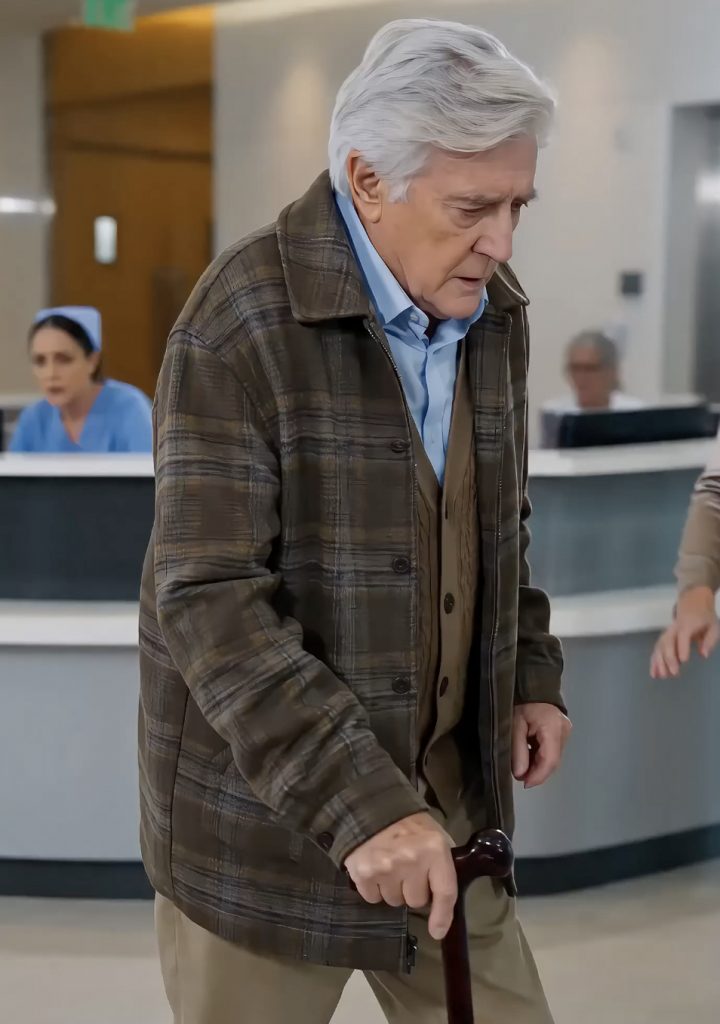
One moment, the elderly man was making his way slowly through the hospital’s VIP lobby, leaning on his polished wooden cane. The next, he was sprawled on the gleaming floor, his coat twisted beneath him and his cane skidding several feet away.
A gasp rippled through the reception area.
Nurses looked up from their stations.
Visitors froze mid-step.
But before anyone could react, the woman responsible for the fall marched forward as if she had done nothing wrong.
Dressed in a champagne-colored designer suit adorned with diamonds, she stood over him with visible disgust.
“Step aside,” she snapped.
The old man blinked in confusion, trying to push himself up.
The woman pointed at him like he was an inconvenience.
“This place is not for people like you. If you have no money, don’t dirty the VIP lounge.”
The words echoed through the bright hospital lobby.
Some people looked horrified.
Others looked away.
No one stepped forward.
The old man remained on the floor, supporting himself with one trembling arm.
His face showed neither anger nor fear.
Only exhaustion.
As though life had taught him long ago that dignity often survives where pride cannot.
The woman adjusted her handbag and scoffed.
To her, he was just another elderly stranger who had wandered somewhere he didn’t belong.
A poor man.
An obstacle.
A nobody.
What she didn’t know was that the entire hospital existed because of people like him.
And within seconds, everyone would discover exactly who she had just humiliated.
But first, a set of double doors burst open.
Act II
Professor Samuel Whitaker had spent most of his life in places that looked nothing like this hospital.
Long before marble floors and VIP wings bore his name on donor plaques, he had worked in cramped laboratories with leaking ceilings and outdated equipment.
He had never cared much about money.
He cared about answers.
As a young researcher, he became obsessed with one question.
Why were so many patients dying from diseases that could have been diagnosed earlier?
For decades, he worked relentlessly.
While others chased prestigious appointments and media attention, Samuel focused on research.
Night after night.
Year after year.
He missed vacations.
Skipped celebrations.
Spent countless evenings sleeping on office couches.
Friends called him obsessed.
Perhaps he was.
But obsession changed lives.
His breakthroughs in diagnostic medicine helped hospitals detect life-threatening illnesses months earlier than before.
The technology he pioneered eventually saved tens of thousands of patients.
Medical schools taught his methods.
Researchers built entire careers expanding on his discoveries.
Doctors around the world cited his work.
Yet outside academic circles, very few people recognized him.
That was exactly how he preferred it.
The old professor never purchased luxury cars.
Never moved into a mansion.
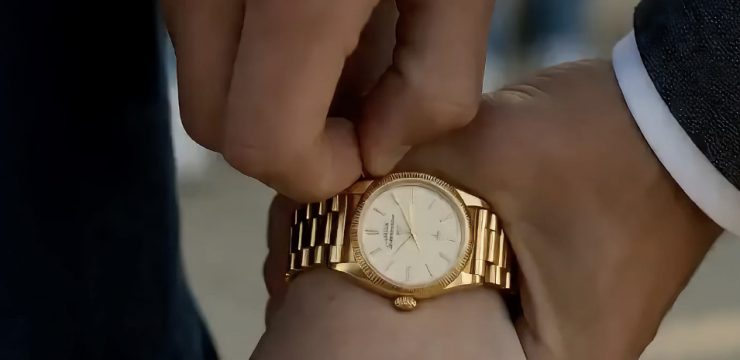
Never wore expensive watches.
His wardrobe remained simple.
His habits unchanged.
Even after becoming one of the most respected medical minds in the country.
To strangers, he looked like an ordinary elderly man.
And that was precisely what the wealthy woman had seen.
An appearance.
Not a story.
Not a legacy.
Just an old coat and a cane.
The kind of mistake that often reveals far more about the observer than the person being observed.
Then the doctors arrived.
Act III
The double doors swung open with urgency.
A group of physicians rushed into the lobby.
White coats fluttered behind them.
At their center was Chief of Medicine Dr. Richard Hayes.
The moment he saw the old man on the floor, his expression changed.
Panic.
Real panic.
Not the professional concern doctors show patients every day.
Something deeper.
Something personal.
Without even glancing at the wealthy woman, he hurried across the lobby.
Several doctors followed immediately behind him.
The crowd parted.
Silence spread through the room.
Dr. Hayes dropped to one knee beside the elderly man.
“Professor,” he said, his voice filled with concern. “Please forgive this disrespect.”
The entire lobby froze.
The old man offered a tired smile.
“It’s alright, Richard.”
But Dr. Hayes looked devastated.
He carefully helped Samuel back to his feet.
Other physicians formed a protective semicircle around them.
Several nurses exchanged shocked looks.
Visitors whispered.
The wealthy woman frowned.
Professor?
The title sounded familiar.
Uncomfortably familiar.
Then one of the younger doctors spoke.
“Should we call the board chairman?”
Another doctor answered quietly.
“They’re already on their way.”
The wealthy woman’s stomach tightened.
Board chairman?
What was happening?
Who exactly was this man?
And why did the hospital’s leadership seem terrified that he had been treated poorly?
Then the truth began spreading through the lobby.
Act IV
One nurse whispered it first.
Another repeated it.
Then a third.
Within moments, the entire room knew.
Professor Samuel Whitaker.
The Samuel Whitaker.
Medical pioneer.
Research legend.
Recipient of countless international awards.
Founder of the Whitaker Institute for Diagnostic Medicine.
The man whose donations had funded entire wings of the hospital.
The man whose research had transformed modern healthcare.
The man whose portrait hung in the executive conference room.
The wealthy woman’s face drained of color.
Her fingers tightened around her designer handbag.
“No…” she whispered.
She looked again at the old man.
The cardigan.
The cane.
The worn coat.
Suddenly, she wasn’t seeing poverty anymore.
She was seeing greatness she had completely failed to recognize.
Dr. Hayes helped Samuel stand upright.
“Are you injured, Professor?”
Samuel shook his head.
“I’ve survived worse than a fall.”
A few nervous laughs emerged.
The wealthy woman couldn’t speak.
Every eye in the lobby had shifted toward her.
She felt the judgment now.
The same judgment she had so casually handed to someone else minutes earlier.
Then a hospital administrator hurried into the lobby.
The moment he saw Samuel standing there, he immediately extended his hand.
“Professor Whitaker, we’re honored by your visit.”
Samuel nodded politely.
The administrator then turned toward the wealthy woman.
His expression hardened.
“What happened here?”
Nobody answered.
Because everyone had seen it.
The security cameras had seen it.
The nurses had seen it.
The visitors had seen it.
And worst of all for her, Samuel had seen it.
There was no version of events that could save her.
No explanation that could erase what she had revealed about herself.
Because the problem was never that she failed to recognize a famous professor.
The problem was that she believed an ordinary old man deserved less respect.
Act V
An hour later, the lobby looked very different.
The crowd had dispersed.
The excitement had faded.
But the lesson remained.
Hospital leadership offered repeated apologies to Professor Whitaker.
He accepted every one of them graciously.
That was his nature.
The wealthy woman, however, could not stop replaying the moment in her mind.
Not the shove.
Not the fall.
Not even the public embarrassment.
What haunted her was the realization that she would have treated him exactly the same if he truly had been poor.
That truth was impossible to escape.
Before leaving, Samuel asked to speak privately with several hospital executives.
No one knew exactly what was said.
But word spread quickly afterward.
A new staff initiative would be implemented throughout the hospital.
Not about VIP treatment.
Not about donors.
Not about wealthy patients.
About dignity.
Every patient.
Every visitor.
Every family member.
Every person.
No exceptions.
Because illness does not care about status.
Pain does not care about money.
And humanity should not depend on either.
As Samuel prepared to leave, Dr. Hayes walked him toward the entrance.
“Professor,” he said quietly, “after everything you’ve done, people should know who you are.”
Samuel smiled.
The lines around his eyes deepened.
“If people only respect me because they know my name,” he replied, “then they missed the lesson.”
Outside, sunlight spilled across the hospital steps.
The old professor picked up his cane and began walking toward the waiting car.
Slowly.
Steadily.
The same way he had entered.
Behind him stood one of the finest hospitals in the country.
A hospital built upon decades of sacrifice, research, and compassion.
And inside that building, dozens of people would remember one simple truth for the rest of their lives:
The measure of a person is never found in their clothes, their bank account, or the way they first appear.
Sometimes the most important person in the room is the one everyone else overlooked.