Act I
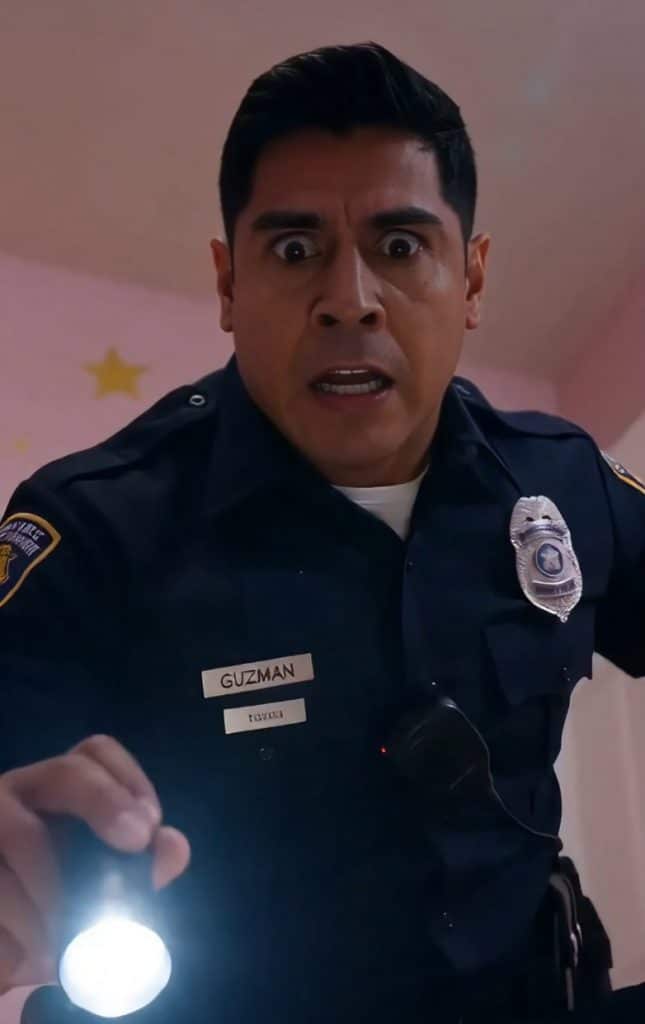
Officer Guzman knew children invented monsters.
He had checked closets for them before. Looked under beds. Shined flashlights behind curtains while embarrassed parents stood in doorways apologizing for wasting police time.
But the little girl in the pink bedroom was not looking at the closet.
She was looking at the floor.
She sat curled in the corner, small knees pulled to her chest, a brown teddy bear crushed in her arms. Her name was Sofia. She was six years old, with long dark hair and eyes too wide for a child who had only had a nightmare.
“There’s something under the floor,” she whispered.
Behind Guzman, her mother sighed.
“She’s been saying that all week.”
Her father, Dr. Alan Pierce, adjusted his glasses in the doorway. He wore a pale blue shirt beneath a white lab coat, as if even at midnight he wanted the world to remember he was a rational man.
“It’s just another nightmare,” he said.
Guzman did not answer.
He clicked on his flashlight and lowered the beam to the parquet tiles.
The room was soft and childish in every direction. Pink walls. Yellow stars. A glowing globe lamp on the dresser. A white door open to a bright hallway where two adults watched with exhaustion instead of fear.
But Sofia was afraid enough for all of them.
“Where?” Guzman asked.
The mother frowned. “Officer, really, you don’t have to—”
“Where, Sofia?”
The girl lifted one trembling hand and pointed.
Not vaguely.
Not toward the middle of the room.
Toward one exact tile near the foot of the bed.
Guzman knelt.
The wood creaked beneath his knee. The flashlight beam moved slowly across the floor, catching dust in the seams. He ran his fingers over each border, tile by tile, feeling for looseness, warping, anything unusual.
The father gave a tired little laugh.
“This is unnecessary.”
Guzman stopped moving.
One tile had a thin, uneven gap around it.
Too clean to be age.
Too deliberate to be damage.
His thumb found an edge.
The tile lifted.
Not like a broken floorboard.
Like a panel.
Darkness opened beneath it.
Guzman leaned in with the flashlight.
For half a second, he did not breathe.
Then he jerked back so violently he nearly fell onto one hip.
“Everybody back!” he shouted.
The mother gasped.
The father froze.
Sofia pulled the teddy bear tighter against her chest, tears spilling down her cheeks, not because she was surprised.
Because at last, someone else had seen it too.
And beneath the floor, in the narrow darkness, a tiny red light blinked back.
Act II
The Pierces had moved into the house three months earlier.
It was the kind of house young families were supposed to dream about. Quiet street. Good school district. Tall windows. Fresh paint. A backyard with a swing set left by the previous owners.
Sofia hated it from the first night.
Her mother, Elena, thought it was grief.
They had moved after a difficult year, after Elena’s sister died and Sofia stopped sleeping through the night. The child had become clingy, quiet, afraid of dark spaces. Elena believed the new house would help. New room. New furniture. New start.
Alan believed the same thing, though he said it differently.
“She needs structure,” he told Elena. “Not attention for every fear.”
Alan was Sofia’s stepfather. He had married Elena two years earlier, a respected pediatric specialist with polished manners and the unnerving calm of a man who always sounded correct.
People liked him.
Elena had liked that at first.
After years of feeling alone, she mistook calm for safety.
Sofia never did.
She did not dislike Alan loudly. She did not throw tantrums or refuse to speak to him. She simply watched him. The way children watch adults when their bodies know something before their words do.
Then the noises started.
At first, Sofia said there was scratching beneath the floor.
Elena checked. Nothing.
Then she said something clicked under the bed.
Alan checked. Nothing.
Then she woke screaming that someone whispered her name from the wood.
That was when Alan became impatient.
“There is no one under the floor,” he told her. “You are scaring your mother.”
Sofia cried harder.
Elena tried nightlights. Music. Warm milk. New blankets. She even slept on the floor beside Sofia’s bed one night, waking with an aching back and guilt in her throat.
She heard nothing.
But Sofia kept insisting.
Not monsters.
Not ghosts.
Something under the floor.
The call to police happened only because Sofia ran out of the house barefoot at 11:43 p.m. and knocked on a neighbor’s door, sobbing so hard she could barely speak.
The neighbor called 911.
Alan was furious.
Elena was mortified.
Officer Guzman arrived expecting a frightened child and overwhelmed parents.
Then he saw Sofia’s face.
Not dramatic.
Not manipulative.
Terrified.
He had seen children lie. He had seen children exaggerate.
He had also seen adults dismiss the truth because it came from a small voice.
So he entered the bedroom.
He followed her gaze.
And now the hidden floor panel lay open between them like the house had finally confessed.
Act III
Guzman kept one arm out, holding everyone back.
“Do not step closer.”
Elena’s voice shook. “What is it?”
Guzman did not answer right away.
His flashlight stayed fixed inside the cavity.
Beneath the tile was a narrow hidden compartment lined with black foam. It was not old. It was not dusty. It had been installed recently and carefully.
Inside were wires.
A small recording device.
A pinhole camera angled upward through a tiny drilled space between the floorboards.
And beside it, wrapped in plastic, was a child’s bracelet.
Pink beads.
White letters.
SOFIA.
Elena made a sound like the floor had opened under her too.
Alan stepped forward. “That is not mine.”
Guzman turned slowly.
“No one asked you yet.”
Alan’s face hardened.
“It was probably left by the previous owner. This is an old house.”
Guzman looked back at the compartment.
The battery pack light blinked steadily.
“This device is active.”
The hallway went silent.
Sofia began to cry again, but quietly now. Elena crossed the room toward her daughter, and this time Guzman did not stop her. Sofia reached for her mother with both arms, burying her face in Elena’s robe.
“I told you,” she sobbed. “I told you.”
Elena held her so tightly she could barely breathe.
“I’m sorry,” she whispered. “I’m so sorry.”
Guzman called for backup.
Then he asked the question that changed everything.
“Who has access to this room?”
Elena looked at Alan.
Alan did not move.
His calm was gone now, replaced by something flatter and colder.
“This is ridiculous,” he said.
Guzman stood.
“Sir, step into the hallway.”
“I live here.”
“And right now, you are going to step into the hallway.”
For the first time since Guzman arrived, Alan looked afraid.
Not of the compartment.
Of what it might lead to.
Backup came within minutes. The house filled with radios, gloves, evidence bags, and low voices. Sofia stayed in the living room with her mother while another officer sat nearby, speaking gently enough that the child stopped shaking.
In the bedroom, investigators removed the hidden device.
It was connected to more than the room.
A wire ran beneath the flooring toward the wall.
Then into the hallway.
Then downstairs.
Guzman followed it with the others.
It ended behind a locked cabinet in Alan’s home office.
Inside were hard drives.
Patient files.
School photos.
And a list of addresses.
Elena stood at the office door, pale and trembling.
“What is this?” she asked.
Alan looked at her as if she were a stranger who had interrupted his life.
Then he said the worst possible thing.
“You wouldn’t understand.”
Act IV
Alan Pierce was not only watching Sofia.
That was the truth that turned the case from terrifying to enormous.
The hard drives contained footage from multiple homes. Not all bedrooms. Some playrooms. Some nurseries. Some waiting rooms in his clinic. Investigators later learned he had used his position as a pediatric specialist to gain trust, recommend home “sleep monitoring” systems, and refer families to a contractor who no one could find once police began searching.
The contractor was a shell.
The invoices led back to Alan.
Elena listened to this in pieces over the following hours, each one cutting away another part of the life she thought she had built.
The man who packed Sofia’s lunches.
The man who read medical journals at the kitchen island.
The man who kissed her forehead before work.
A stranger.
A careful, patient stranger who had built hiding places beneath their own floors.
Guzman found her sitting on the stairs near dawn, Sofia asleep against her side with the teddy bear still clenched beneath one arm.
Elena looked up at him.
“I didn’t know.”
He believed her.
But belief did not erase what she felt.
“I told her she was dreaming,” Elena whispered. “She kept begging me to believe her.”
Guzman sat on the step below, giving her space.
“Now you do.”
Her eyes filled.
“Too late.”
He looked toward Sofia.
“No,” he said. “Not too late.”
Alan tried to control the story until the very end.
He told officers the devices were part of a research project. He said Elena had memory problems. He said Sofia was unstable. He said Guzman had contaminated the scene by trusting a frightened child.
Guzman said nothing.
He did not need to.
The evidence spoke clearly enough.
Then Sofia woke.
She looked at Alan standing near the front door between two officers, no longer in his lab coat, no longer untouchable.
He smiled at her.
Softly.
The old performance.
“Sofia,” he said, “tell them this is a misunderstanding.”
The little girl pressed closer to her mother.
Her voice was tiny, but everyone heard it.
“You told me nobody believes children.”
Elena closed her eyes as the sentence landed.
Guzman turned to Alan.
The doctor’s mask finally cracked.
Not much.
Just enough.
Enough for the room to see the man beneath it.
Alan Pierce was arrested before sunrise.
As officers led him out, the morning light turned the pink bedroom walls soft and innocent again. The yellow stars still glowed faintly in the lamp light. The white dresser stood exactly where it had before.
But the floor was open now.
The secret had air.
And Sofia, wrapped in her mother’s arms, watched the man who had called her fear a nightmare disappear through the front door.
Act V
The house went quiet after the police left.
Not peaceful.
Just emptied.
Elena refused to let Sofia sleep in the bedroom again. They stayed with her cousin for three weeks, then moved into a small apartment above a bakery where the floorboards creaked honestly and no one told Sofia not to be afraid.
Healing began badly.
That surprised Elena.
She thought safety would feel like relief.
Instead, it felt like guilt.
Sofia woke often. Sometimes she asked Elena to check under the bed, behind the curtains, beneath the rug. Sometimes she said nothing and simply stood in the doorway holding the teddy bear, waiting to be invited in.
Elena always invited her in.
Every time.
No sighing.
No “not again.”
No “it was just a dream.”
Just open arms and the same sentence until Sofia started believing it.
“I hear you.”
The investigation expanded beyond their family.
Other parents were contacted. Other hidden devices were found. Some families were furious. Some were ashamed. Some could not understand how they had missed it.
Guzman understood.
Predators like Alan did not succeed because everyone around them was foolish. They succeeded because they learned how to borrow trust from good places. Medicine. Marriage. Authority. Calm voices. Clean coats.
The case made headlines for weeks.
Elena avoided most of them.
She cared about one thing.
Sofia.
At the preliminary hearing, Sofia did not testify in open court. The judge spared her that. But a child advocate read a short statement she had written with crayons on lined paper.
I was scared. I told the truth. Officer Guzman looked.
That was all.
It was enough.
Alan’s attorney tried to argue about procedure, reputation, mental strain, professional standing. The judge looked at the evidence photos and denied bail.
When Guzman stepped into the hallway afterward, Elena was waiting.
Sofia stood beside her, holding the teddy bear by one paw.
For a moment, none of them spoke.
Then Sofia walked to Guzman and handed him something.
A yellow paper star.
She had cut it from construction paper and written his name in blue marker.
OFFICER GUZMAN BELIEVED ME.
Guzman stared at it longer than he meant to.
Then he crouched so they were eye level.
“You were very brave,” he said.
Sofia shook her head.
“I was scared.”
He nodded.
“Brave people usually are.”
Months passed.
Sofia’s new room had lavender walls, not pink. No parquet floor. A thick rug she chose herself. Her bed sat against the wall, and a small lamp stayed on every night.
One evening, Elena found her daughter placing paper stars above the dresser.
Not yellow this time.
Blue, green, silver.
Each one had a word on it.
Safe.
Mom.
Light.
Truth.
Guzman.
Elena leaned against the doorframe and cried without making sound.
Sofia turned.
“Are you sad?”
Elena wiped her face quickly, then stopped pretending.
“Yes,” she said. “And proud.”
Sofia thought about that.
Then she held up a blank star.
“You can make one too.”
Elena sat on the floor beside her daughter.
For a long time, she could not decide what to write.
Sorry felt too small.
Love felt too obvious.
Finally, she wrote one word.
Believe.
Sofia took the star and taped it beside the others.
That night, for the first time in months, she slept until morning.
A year later, the old house was sold.
Before the sale, Elena returned once with Guzman and the prosecutor to walk through the property after the forensic team had finished. Sofia did not come. Elena would not let that place take another piece of her child.
The bedroom was empty now.
No dresser. No globe lamp. No teddy bear in the corner.
Only pale marks on the walls where stars had once been.
The parquet panel had been replaced, but Elena knew exactly where it had been. She stood over that spot and felt the old horror rise in her body.
Guzman waited near the door.
“You don’t have to stay.”
Elena looked down at the floor.
For weeks, she had imagined tearing the room apart. Smashing every tile. Screaming until the house understood what it had held.
Instead, she knelt and placed one paper star on the floor.
Blue.
Sofia’s color.
Then she stood.
“I’m done,” she said.
Outside, the air was bright and cold.
Elena walked out without looking back.
The door closed behind her.
Not softly.
Not carefully.
Closed.
And somewhere across town, in a lavender bedroom with paper stars over the dresser, a little girl slept in a room where the floor was only a floor, the night was only night, and every small voice was finally heard.